
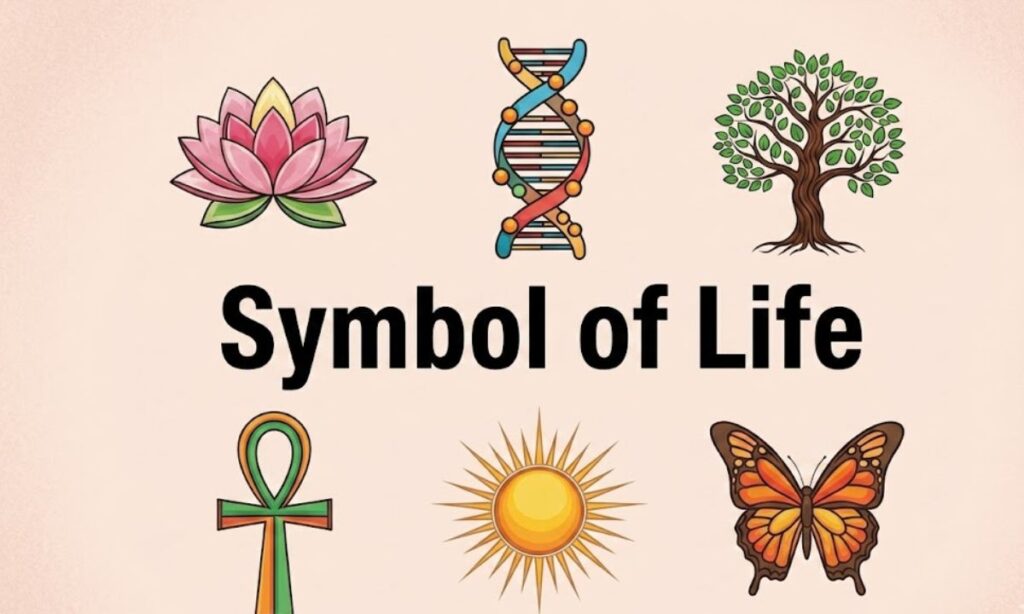
Have you ever looked at a tattoo, a piece of jewelry, or an ancient carving and felt something stir inside you — even without knowing why? That’s the quiet power of life symbols at work.
Across every civilization and every era, humans have used symbols to express what words alone cannot capture: the mystery, beauty, and fragility of being alive.
In this guide, you’ll discover 93+ powerful life symbols, their origins, spiritual meanings, and why they still matter deeply today. Whether you’re exploring symbols for a tattoo, a piece of art, or simply seeking a deeper connection to the world around you, this is the most comprehensive resource you’ll find.
What Are Life Symbols?
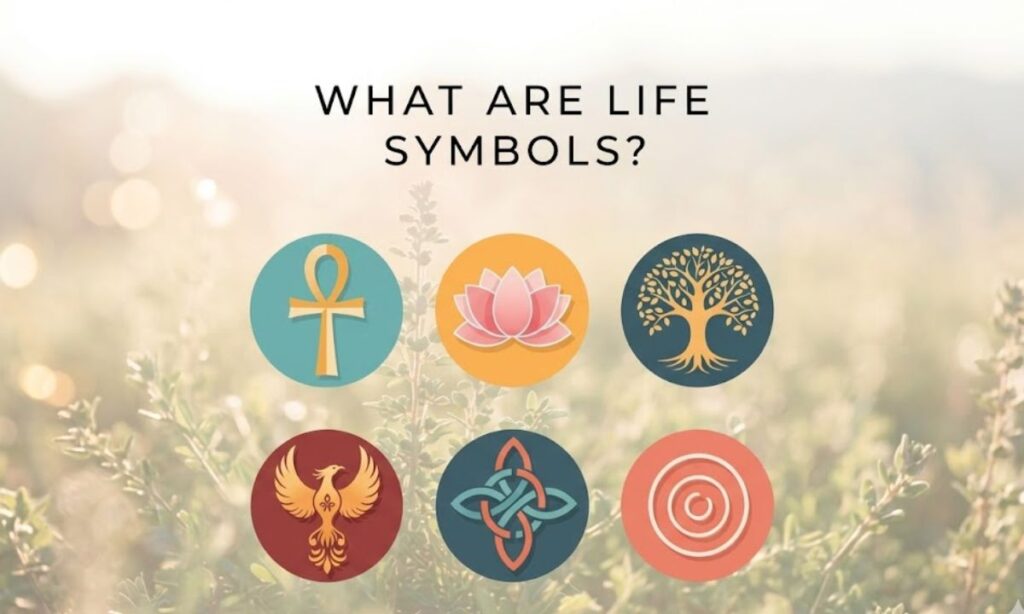
Life symbols are visual signs, objects, or patterns that represent the concept of existence, vitality, growth, renewal, or the eternal cycle of life and death. They appear across cultures, religions, and time periods — from ancient Egyptian tomb paintings to modern tattoo studios.
These symbols serve as:
- Reminders of our connection to something larger than ourselves
- Cultural markers of identity, faith, and heritage
- Spiritual anchors during difficult times
- Artistic expressions of deeply held beliefs
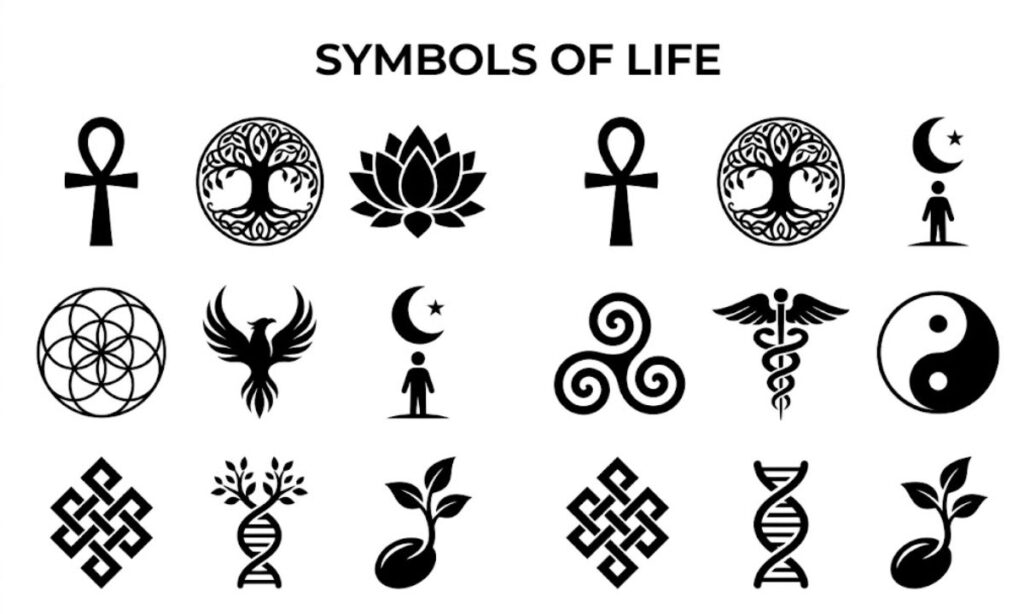
Life Symbols and Meanings: A Master Overview
| Symbol | Origin | Core Meaning |
| Ankh | Ancient Egypt | Eternal life, immortality |
| Tree of Life | Global | Growth, connection, ancestry |
| Lotus Flower | Hindu/Buddhist | Rebirth, purity, enlightenment |
| Infinity Symbol | Modern/Ancient | Endless possibility, eternity |
| Spiral | Neolithic/Celtic | Cycles, transformation |
| Phoenix | Greek/Egyptian | Resurrection, renewal |
| Scarab Beetle | Ancient Egypt | Rebirth, transformation |
| Butterfly | Global | Change, new beginnings |
| Circle | Universal | Unity, eternity, wholeness |
| Djed Pillar | Ancient Egypt | Stability, endurance |
| Eye of Horus | Ancient Egypt | Protection, healing |
| Ouroboros | Greek/Egyptian | Eternal cycle, self-renewal |
| Olive Branch | Greek | Peace, new life |
| Sunrise | Universal | Hope, new beginnings |
| Egg | Global | New life, potential, creation |
Tree of Life Symbols and Meanings
The Tree of Life is one of the most universally recognized life symbols in human history. Found in Norse mythology as Yggdrasil, in Celtic artwork, in Kabbalah, in Christianity, and in Indigenous traditions worldwide, this symbol carries remarkably consistent meaning across vastly different cultures.
What the Tree of Life Represents:
- Roots — Ancestry, the past, our connection to the earth
- Trunk — Strength, resilience, and present-day existence
- Branches — Growth, aspiration, future potential
- Leaves — Individual lives within a greater whole
The Celtic Tree of Life is particularly striking — its interwoven branches mirror its root system, symbolizing that what grows above is rooted equally below. It represents the balance between heaven and earth, and the interdependence of all living things.
In Norse mythology, Yggdrasil is a massive ash tree that connects nine realms of existence, making it a symbol not just of life, but of the entire cosmos.
Eternal Life Symbols
Some symbols speak directly to humanity’s deepest longing: the hope that life continues beyond death.
The Ankh
The Ankh — shaped like a cross with a closed teardrop loop at the top — is ancient Egypt’s most iconic hieroglyph for “life.” It represents not merely biological existence, but eternal life and the life-giving power of the gods. Found on tomb walls, coffins, and in the hands of pharaohs and deities alike, the Ankh was believed to protect the soul during its journey through the afterlife. Today, it remains a popular symbol in jewelry, tattoo art, and spiritual practice.
The Ouroboros
The Ouroboros — a serpent or dragon eating its own tail — is one of the oldest symbols in recorded history, appearing in ancient Egypt and Greek alchemy. It represents the eternal cycle of life, death, and rebirth, suggesting that endings are always the beginning of something new.
The Infinity Symbol (∞)
The infinity symbol, resembling a sideways figure eight with no beginning or end, represents limitless possibility and the enduring nature of existence. In spiritual symbolism, it suggests that the soul transcends physical time.
Egyptian Life Symbols
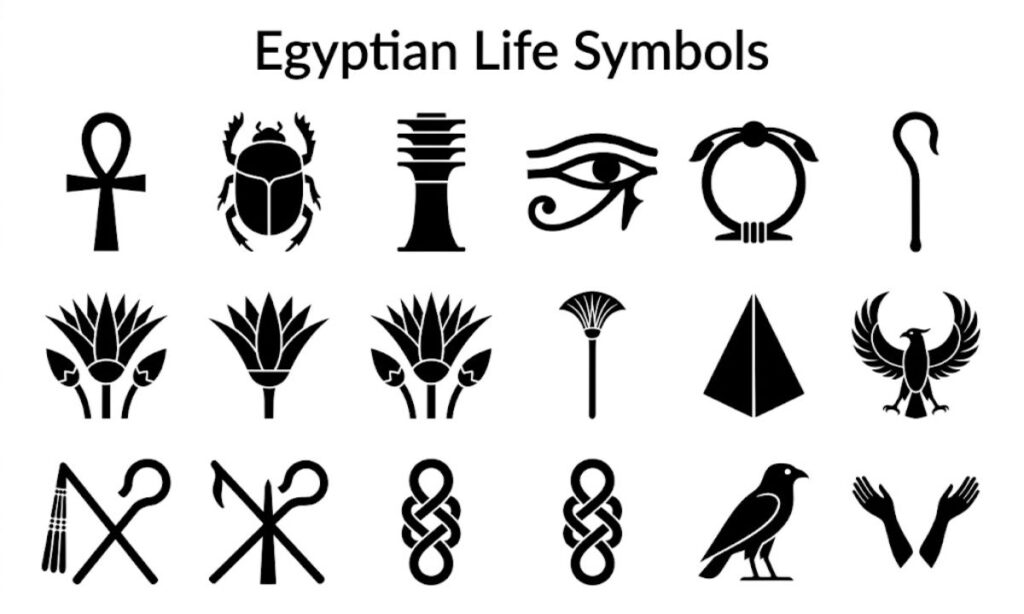
Ancient Egypt produced some of the world’s most powerful and enduring life symbols. For the Egyptians, symbols weren’t merely decorative — they were magical tools for invoking divine power and ensuring safe passage to the afterlife.
The Ankh
Egypt’s primary symbol of life. The Ankh appears in over 85% of Egyptian tomb paintings and was carried by gods, pharaohs, and eventually ordinary Egyptians as an amulet of protection. It embodies both earthly life and the promise of immortality.
The Scarab Beetle
The scarab beetle was associated with Khepri, the god of the rising sun. Ancient Egyptians observed the beetle rolling dung into a ball — mirroring how Khepri rolled the sun across the sky — and saw in this act a symbol of transformation, resurrection, and new life. Scarab amulets were placed over the hearts of mummies to ensure rebirth in the afterlife.
The Djed Pillar
Known as “the backbone of Osiris,” the Djed Pillar represents stability, endurance, and regeneration. It was painted on coffin floors beneath the spine of the deceased, magically lending them the strength to rise again.
Also Read This Symbol meaning on symbolmeans.com
The Eye of Horus
The Eye of Horus is a symbol of protection, healing, and royal power. Used as a powerful amulet in both life and burial, it was believed to have the ability to heal injuries and ward off evil. It also represented the mathematical fractions used in ancient Egyptian measurements — a fascinating blend of the mystical and the practical.
Spiritual Life Symbols and Meanings
Lotus Flower
The Lotus grows from muddy, murky water to bloom in stunning beauty above the surface — making it one of the most profound symbols of spiritual growth, purity, and enlightenment. In Buddhism and Hinduism, the lotus represents the soul’s journey from darkness to light. In Egyptian mythology, the lotus was associated with creation and the sunrise.
The Spiral
Found in Neolithic cave art, Celtic stonework, and Indigenous designs worldwide, the spiral is one of humanity’s oldest symbols. It represents the cyclical nature of life — birth, growth, death, rebirth — and the constant forward motion of existence. The Celtic Triskele (triple spiral) extends this meaning to include the three realms: earth, sea, and sky.
The Infinity Symbol
In spiritual practice, the infinity symbol is worn, meditated upon, and tattooed as a reminder that the soul is not confined to a single lifetime. It speaks of love without limits, time without end, and existence beyond the physical.
New Life Symbols
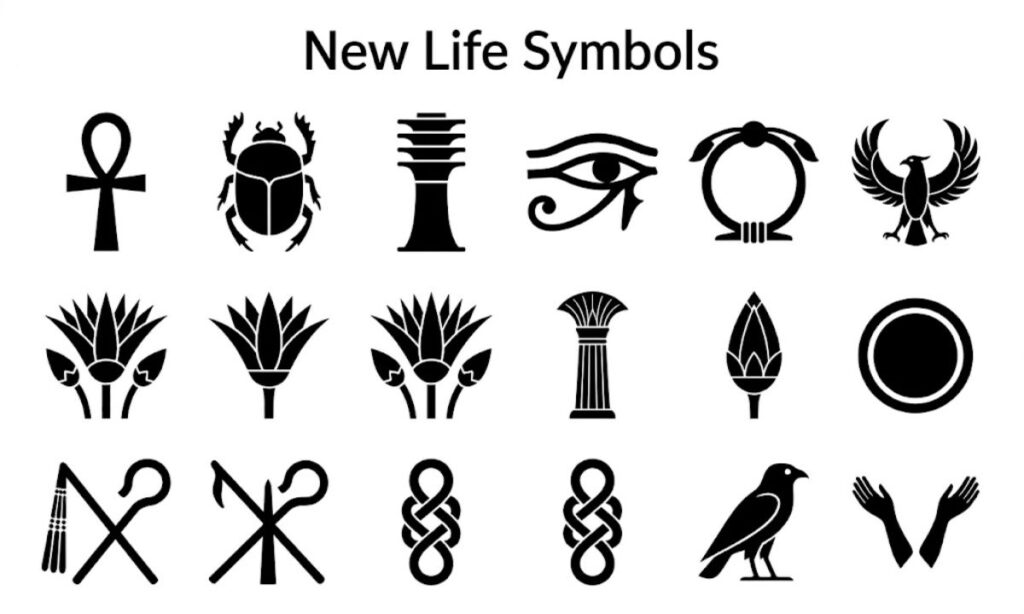
These symbols specifically represent new beginnings, transformation, and the fresh start of life:
| Symbol | Meaning |
| Butterfly | Metamorphosis, transformation, new chapter |
| Sunrise | Hope, fresh start, daily renewal |
| Egg | Untapped potential, creation, birth |
| Phoenix | Rising from ashes, rebirth after loss |
| Seedling/Sprout | Growth from small beginnings |
| Rainbow | Promise, hope after storm |
| Spring Blossoms | Renewal, the return of vitality |
The Phoenix deserves special mention. In Greek mythology, this legendary bird burst into flames at the end of its life cycle, only to rise reborn from its own ashes — making it one of the most powerful symbols of resilience, transformation, and second chances ever conceived.
Greek Life Symbols and Meanings
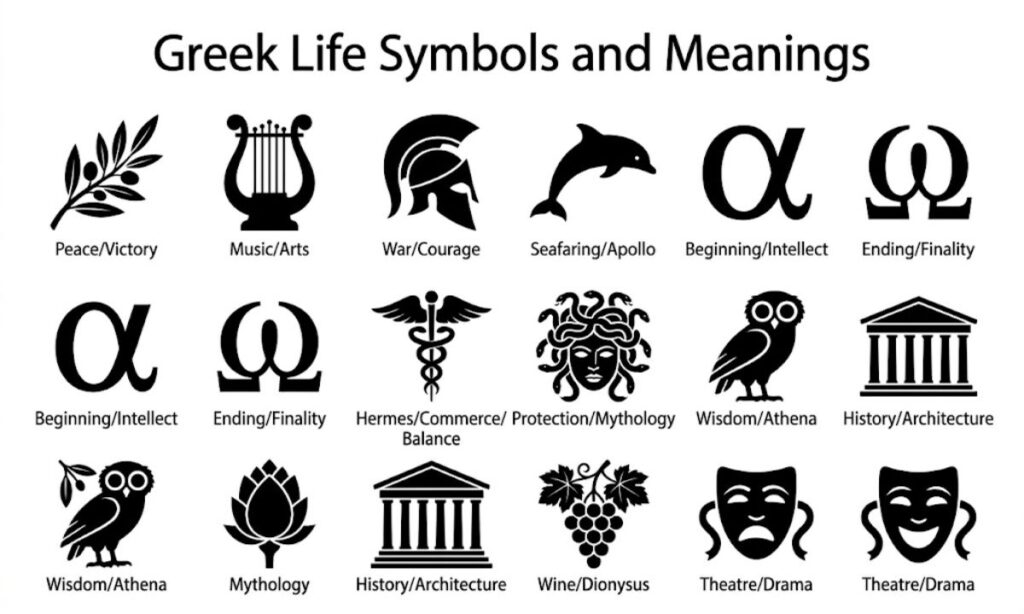
Ancient Greece contributed several powerful life symbols still recognized globally today:
The Olive Branch
The Olive Branch is deeply tied to the goddess Athena, who gifted the olive tree to Athens. It represents peace, new life, prosperity, and hope. Today, it remains an international symbol of peace, used by the United Nations.
The Greek Key (Meander)
This interlocking geometric pattern found on ancient Greek pottery represents eternity and the continuous flow of life. Its unbroken, repeating pattern symbolizes infinity and the interconnectedness of all things.
The Owl
Sacred to Athena, the Owl symbolizes wisdom, insight, and the ability to see beyond illusion — qualities central to living a meaningful, examined life.
The Ankh-Style Cross Confusion
Some people confuse the Ankh with early Christian cross symbols adapted by Greek Coptic Christians — the “crux ansata.” While visually similar, the two carry distinct meanings rooted in their separate traditions.
Flower of Life Symbol
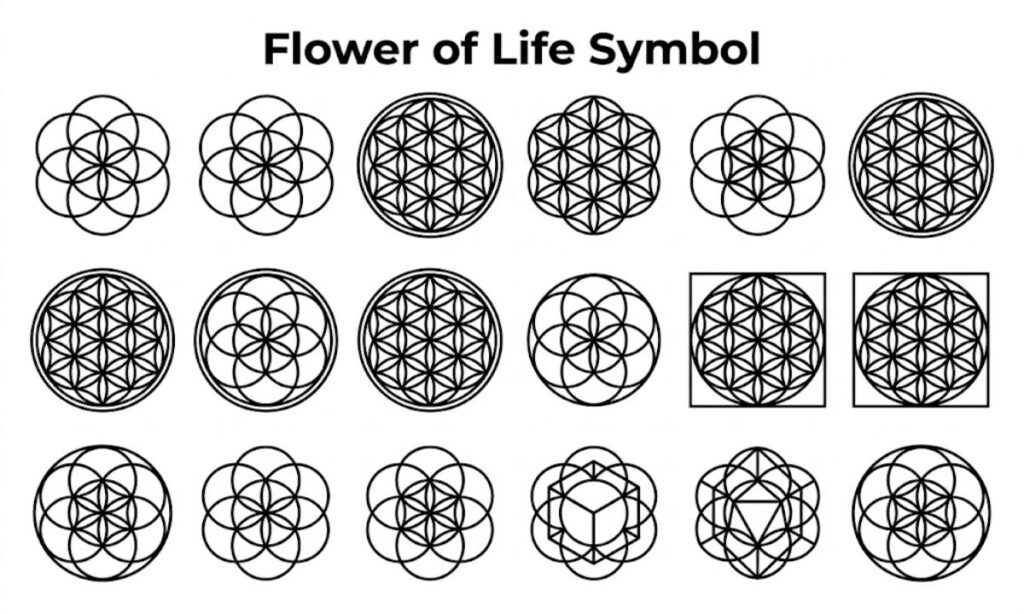
The Flower of Life is one of the oldest sacred geometric patterns known to humanity. Formed from overlapping circles arranged in a perfect hexagonal pattern, it has been found carved into the Temple of Osiris in Egypt, in Leonardo da Vinci’s notebooks, and in ancient sites across India, China, and Israel.
It is said to contain within it the blueprint of the universe — representing creation, harmony, and the fundamental patterns that underlie all existence. Many spiritual traditions view it as the visual expression of how life itself is structured.
Life Symbols Across Cultures
Ancient Egypt
Egypt is the birthplace of many of the world’s most recognizable life symbols. The Ankh, Scarab, Eye of Horus, and Djed Pillar all emerged from a culture that viewed life, death, and rebirth as an unbroken cycle managed by divine forces.
Celtic Culture
The Celts expressed life through interwoven knots (Celtic Knot), spirals (Triskele), and the Tree of Life. Their art style — with no beginning and no end — mirrored their belief in the infinite continuity of existence.
Eastern Cultures
In Hinduism and Buddhism, the Lotus, the Om symbol, and the Mandala are central life symbols. The lotus blooming from mud represents the soul’s rise toward enlightenment. The Om is said to be the sound of the universe itself — the vibration from which all of creation emerged.
Greek Mythology
From the Phoenix to the Olive Branch to the Ouroboros, Greek mythology is rich with life symbols that have survived millennia and still appear in modern logos, art, and spiritual practice.
Native American Culture
The Butterfly holds particular sacred significance in many Native American traditions — representing transformation, hope, and rebirth. The medicine wheel, a circle divided into four sections, represents the cycle of life across the four seasons, four directions, and four stages of human development.
Life Symbols in Art, Movies and Pop Culture
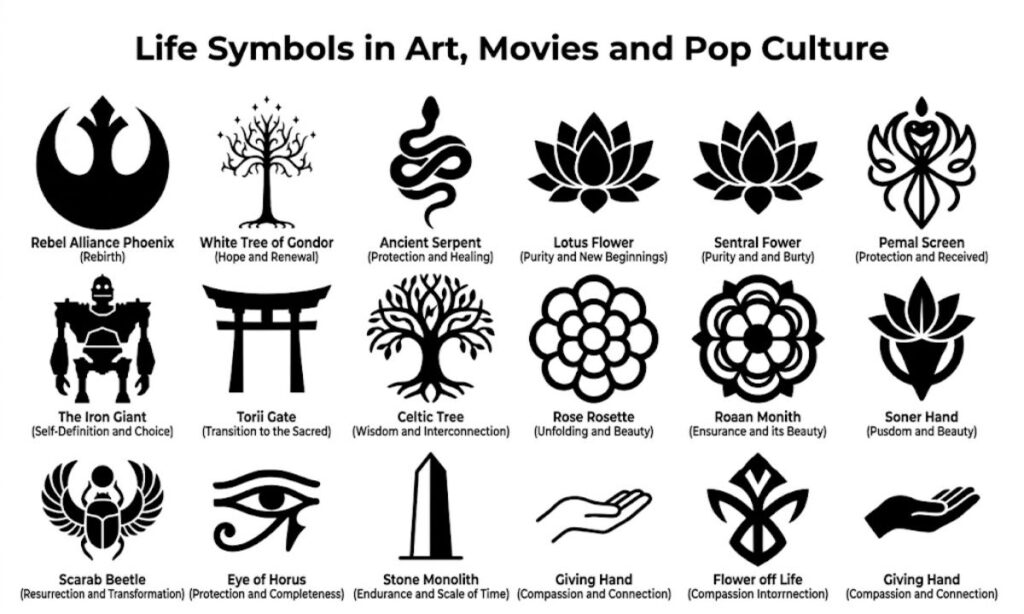
Movies
- The Lion King — The Circle of Life, sunrise imagery, and the baobab tree all function as powerful life symbols
- Harry Potter — The Deathly Hallows symbol incorporates life and death symbolism
- The Matrix — The recurring spiral, green code, and the Ouroboros all speak to cycles of existence
Paintings
The Tree of Life by Gustav Klimt is one of the most famous uses of this symbol in modern art — its golden, spiraling branches representing the interconnectedness of all living things.
Tattoos
Among the most popular life symbol tattoos worldwide:
- Lotus flower — spiritual growth
- Tree of Life — family, strength
- Infinity symbol — eternal love
- Phoenix — overcoming adversity
- Spiral — personal evolution
Fashion and Jewelry
The Ankh, infinity symbol, and Tree of Life appear on necklaces, rings, and bracelets worldwide — worn by people of all backgrounds as reminders of vitality, resilience, and connection.
Positive and Negative Meaning of Life Symbols
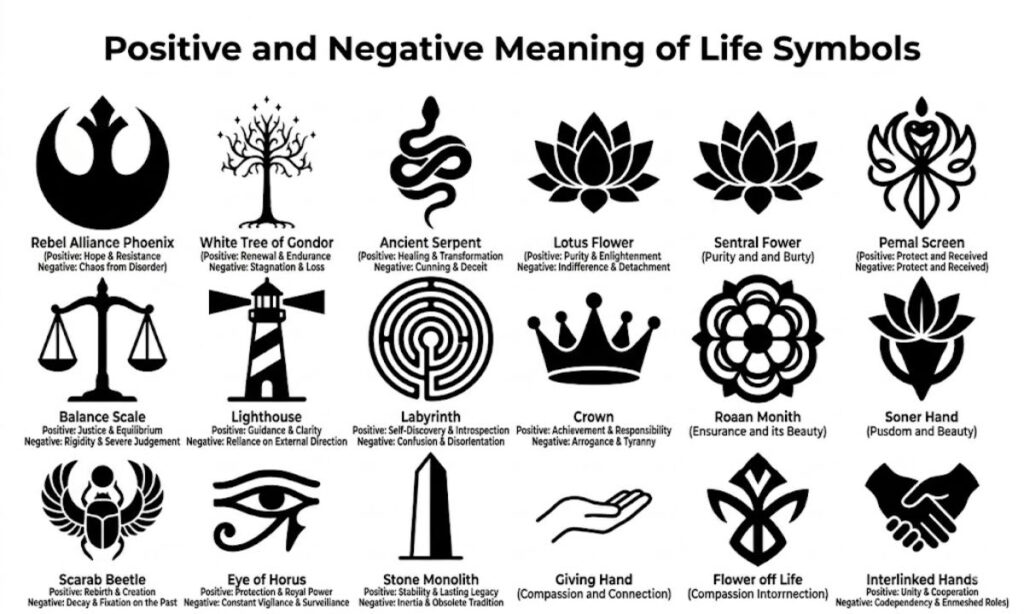
Positive Meaning
Most life symbols carry overwhelmingly positive associations:
- Renewal and rebirth (Lotus, Phoenix, Butterfly)
- Eternity and love (Infinity, Circle, Ouroboros)
- Protection and healing (Eye of Horus, Ankh, Hamsa)
- Growth and wisdom (Tree of Life, Spiral, Olive Branch)
Negative Meaning
Some symbols carry dual meanings depending on context:
- The Ouroboros can represent entrapment in repeating cycles
- The Spiral in some traditions signals chaos before transformation
- The Scarab, though largely positive, is also associated with decay (its origin as a dung beetle)
Deep Symbolic Meaning of Life Symbols
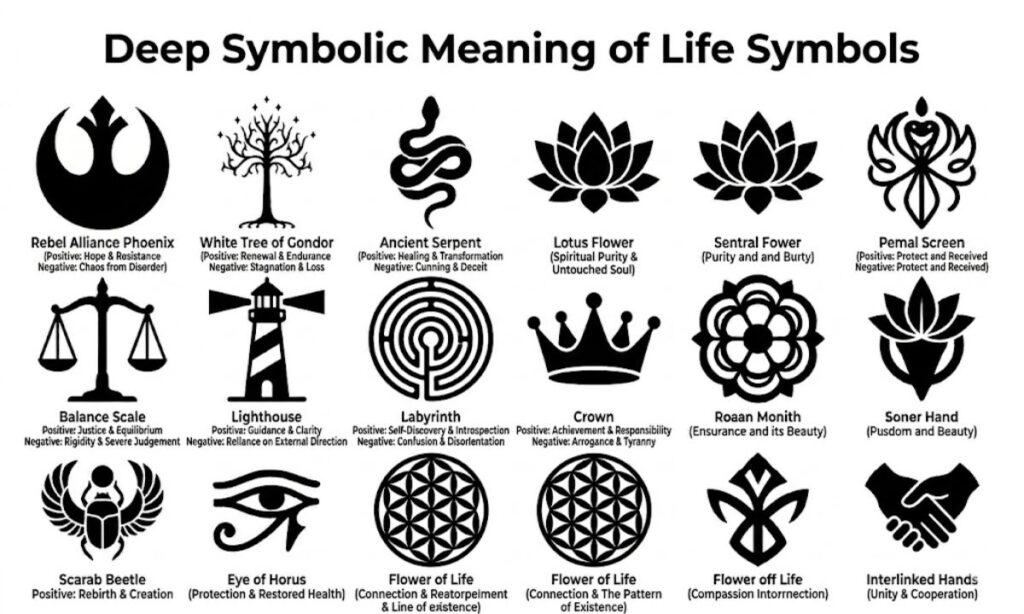
Spiritual Meaning
On a spiritual level, life symbols remind us that physical existence is only one layer of a much larger reality. They point toward something that transcends the body — whether that’s called the soul, consciousness, or simply the interconnectedness of all things.
Psychological Meaning
Carl Jung identified certain symbols as archetypes — universal images that emerge from the collective unconscious. The Tree, the Circle, the Serpent — these appear across unconnected cultures because they tap into something fundamental in the human psyche. Life symbols, in this sense, are the mind’s natural language for speaking about existence.
Cultural Meaning
For communities worldwide, life symbols function as shared cultural vocabulary — connecting individuals to ancestors, traditions, and a sense of belonging that transcends individual lifetimes.
Why Humans Are Attracted to Life Symbols?
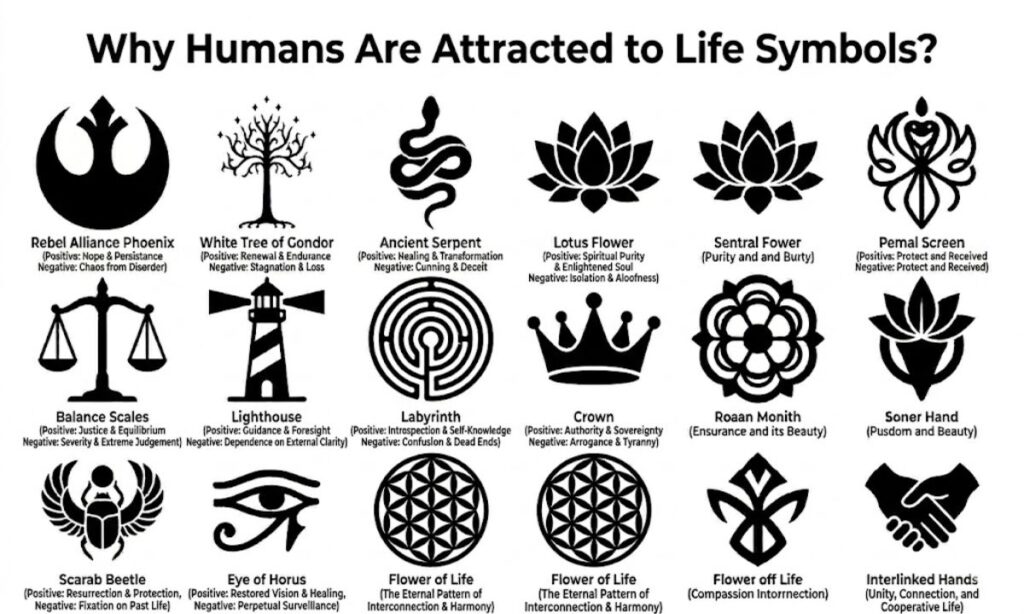
Human beings are meaning-making creatures. We are the only species that contemplates our own existence — and that awareness of life creates an equally powerful awareness of death. Life symbols have always been our answer to that awareness.
They give us:
- Comfort in grief and loss
- Courage during transition and change
- Connection to something larger than ourselves
- Identity within a lineage, tradition, or community
Whether carved on ancient temple walls 5,000 years ago or inked on skin today, life symbols carry the same essential message: existence is sacred, resilient, and worth celebrating.
Conclusion
From the ancient Egyptians who painted Ankhs on tomb walls to the modern person who gets a Phoenix tattooed on their arm, humanity has always turned to symbols to express what matters most: that life is meaningful, that it continues, and that we are all connected.
The 93+ life symbols explored in this guide are far more than decorative motifs. They are humanity’s oldest and most enduring language — one that speaks across time, culture, and belief systems to say the same essential thing: life is profound, life is resilient, and life is worth honoring.
Whether you choose to wear a symbol, display it in your home, or simply understand its meaning more deeply, connecting with these powerful emblems is a way of connecting with something ancient, universal, and deeply human.
